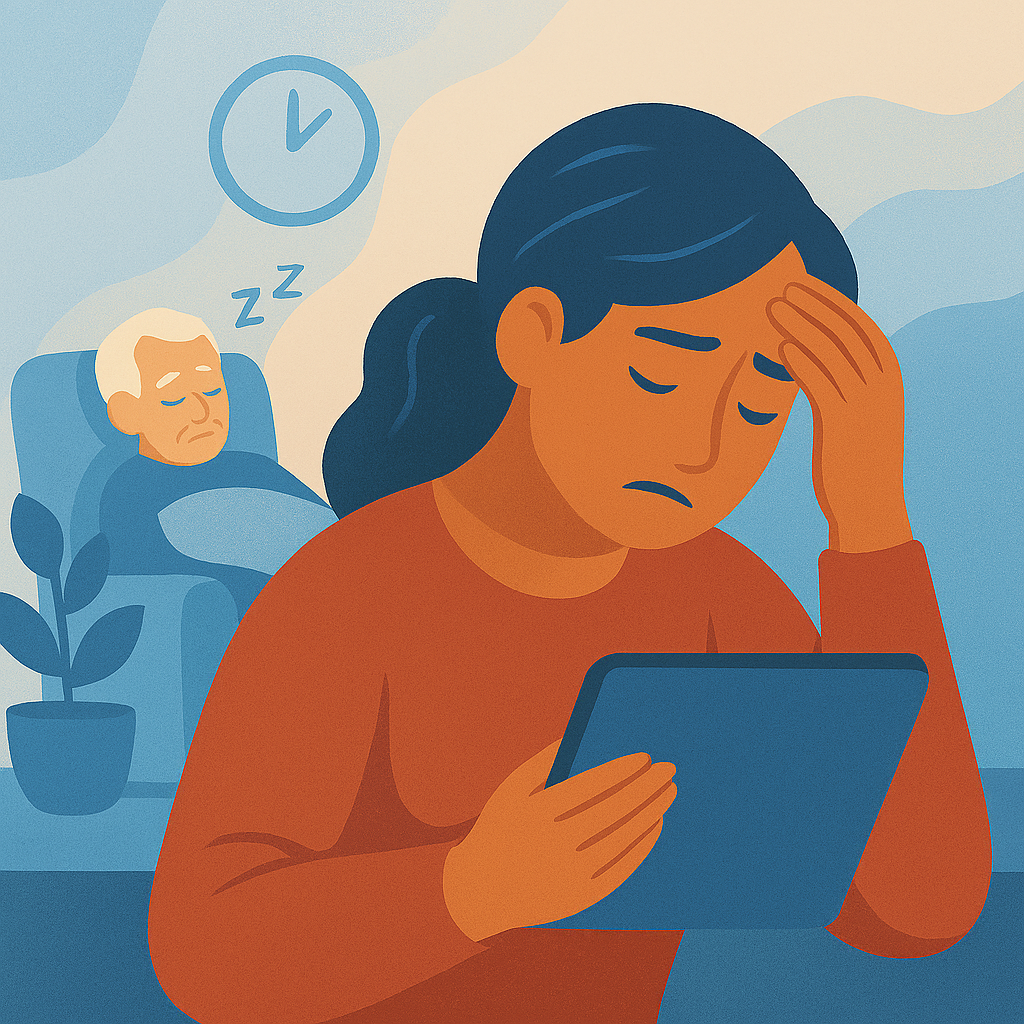
Caring for an aging parent or loved one is one of the most meaningful things you'll ever do. It's also one of the most demanding. If you've been feeling exhausted, irritable, or disconnected lately, you're not alone—and you might be experiencing caregiver burnout.
What Is Caregiver Burnout?
Caregiver burnout is a state of physical, emotional, and mental exhaustion that occurs when caregivers don't get the help they need or try to do more than they're able. Unlike ordinary tiredness, burnout doesn't improve with a good night's sleep. It's a chronic condition that can seriously impact your health and your ability to provide care.
The 7 Warning Signs
Recognizing burnout early is crucial. Here are the signs to watch for:
1. Constant Exhaustion
You feel tired all the time, even after sleeping. Physical and emotional fatigue that doesn't go away is often the first sign that something is wrong.
2. Withdrawal from Friends and Activities
You've stopped doing things you used to enjoy. Social isolation creeps in gradually—cancelled plans become the norm rather than the exception.
3. Changes in Sleep Patterns
You're sleeping too much or too little. Insomnia or oversleeping can both indicate that stress is affecting your body's natural rhythms.
4. Increased Irritability
Small things set you off. You find yourself snapping at your loved one, family members, or coworkers over minor issues.
5. Feeling Hopeless or Helpless
You can't see a way out. The situation feels permanent and unchangeable, leading to feelings of despair.
6. Neglecting Your Own Health
You're skipping doctor appointments, not exercising, or eating poorly. Your own needs always come last—or not at all.
7. Getting Sick More Often
Chronic stress weakens your immune system. If you're catching every cold that comes around, your body may be telling you something.
What To Do If You're Burned Out
The good news is that caregiver burnout is treatable. Here's how to start recovering:
Ask for Help
You don't have to do this alone. Reach out to family members, friends, or professional services. Even small tasks shared can make a big difference.
Set Boundaries
It's okay to say no. Establishing limits on what you can and cannot do protects your wellbeing and ultimately makes you a better caregiver.
Prioritize Self-Care
Schedule time for yourself like you would any other appointment. Exercise, hobbies, and social connections aren't luxuries—they're necessities.
Consider Respite Care
Professional respite services give you a break while ensuring your loved one is cared for. Even a few hours can help you recharge.
Talk to Someone
A therapist, counselor, or support group can provide strategies and emotional support. You don't have to carry this weight alone.
Prevention Is Key
The best approach to burnout is preventing it in the first place. Regular check-ins with yourself, maintaining connections outside of caregiving, and using tools to share the load with family can help you sustain your caregiving journey long-term.
Remember: taking care of yourself isn't selfish. It's essential. You can't pour from an empty cup.